
Tree Maintenance in Salt Lake City, Utah
Tree maintenance that fits how trees grow in Salt Lake County
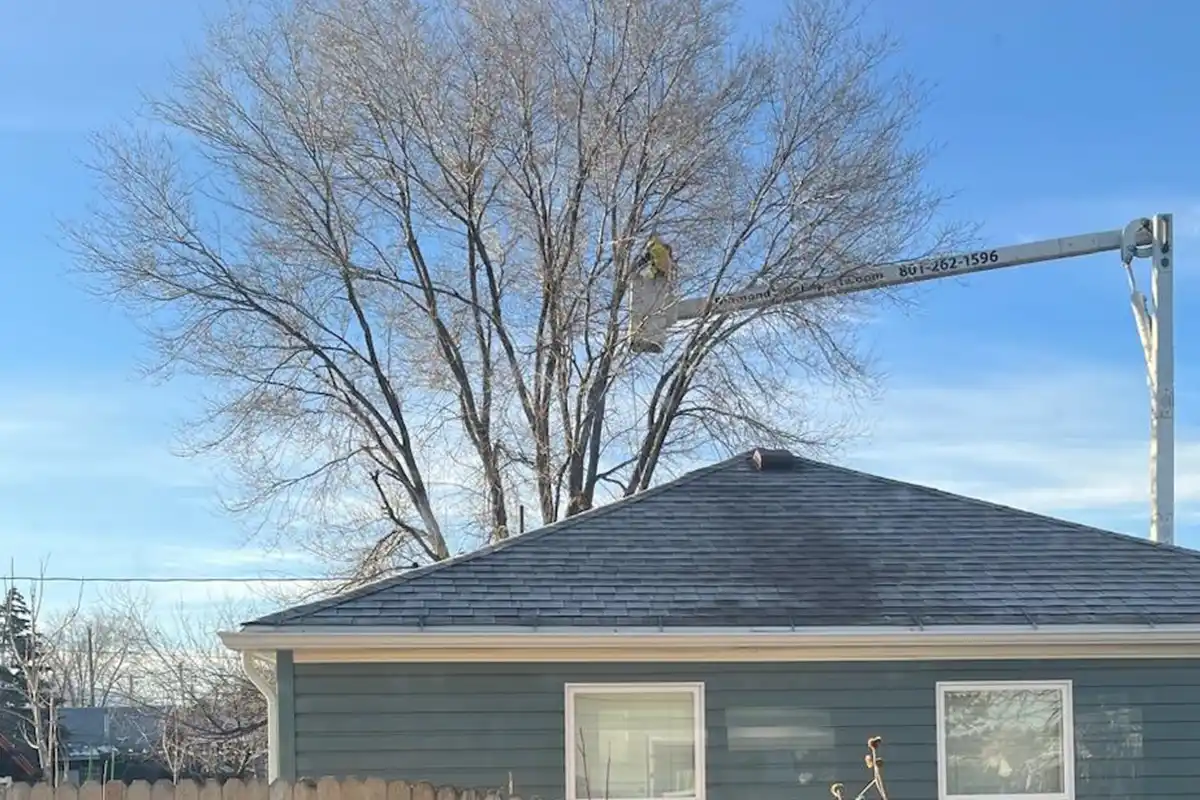
- Serving the Wasatch Front since 1967
- 7 ISA Certified Arborists on staff
- Licensed and insured
- Free estimates
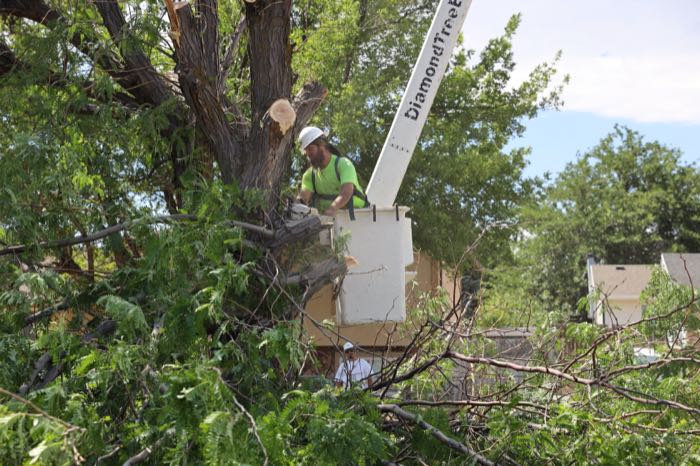
What our tree maintenance covers
- Tree trimming and pruning: removing dead, damaged, and crossing limbs, thinning for light and wind, and clearing branches away from roofs and structures.
- Tree health care: checking soil, watering, and nutrients, and treating stress before it turns into decline. Our plant health care page explains the options.
- Pest and disease treatment: watching for insects and disease and treating problems early.
- Tree inspections and tree risk assessment: finding weak unions, decay, and hazards before they fail.
- Mulch: wood chip mulch by the yard for the 2 to 4 inch layer your trees need.
- Storm damage cleanup and tree debris cleanup after wind and snow.
- Tree removal and stump grinding when a tree cannot be saved.
Tree maintenance calendar for Salt Lake City and the Wasatch Front
| When | What to do | Why then |
|---|---|---|
| Late winter (mid-January to March) | Prune shade trees while they are dormant, starting in mid-January. Apples and pears follow from mid-February and stone fruits from mid-March. Remove dead, broken, and crossing limbs while the branches are bare. | Bare branches show the structure clearly, and pruning before buds swell lets wounds close faster. Timing follows Utah State University Extension guidance. |
| Spring (April to May) | Check for winter damage and dead wood as trees leaf out. Refresh mulch 2 to 4 inches deep and keep it off the trunk. Start regular watering for newly planted trees. | Leaf-out shows which branches did not survive winter, and insect activity starts picking up. |
| Summer (June to August) | Water established trees deeply at least once a week in dry weather. Watch for heat stress, aphids, mites, and leaf scorch. Limit pruning to hazards and dead limbs. | Heat and drought are the biggest stress on Wasatch Front trees, and heavy pruning adds to it. |
| Fall (September to November) | Give trees a few long, deep soaks before the ground freezes. Inspect for weak limbs before the first snow. Hold off on heavy pruning. | Wet, heavy snow on trees that still hold their leaves breaks limbs, and fall pruning can damage trees. |
| Winter (December to early January) | Inspect after wind and snow storms and remove broken limbs. Established trees rarely need extra water in winter. If the weather stays dry, about once a month is enough. | Evaporation is low in winter and precipitation is frequent. Utah State University Extension notes established trees often need no irrigation. |
What makes tree care in Salt Lake County different
Dry summers call for deep, infrequent watering
Wind, wet snow, and storm damage
Alkaline soil and yellow leaves
Pests and diseases to watch for
Is it a city tree or your tree?
Signs your tree needs attention now
- Dead, brittle, or hanging branches, especially over a roof, driveway, or play area
- Cracks, splits, or tight V-shaped joints where two stems meet
- A new lean, lifted soil, or exposed roots at the base
- Mushrooms or shelf-like growths on the trunk or at the base
- A thinning canopy, early leaf drop, or leaves that yellow or scorch in summer
- Sticky residue on leaves, small holes with sawdust-like debris, or peeling bark
- Limbs touching the roof, siding, or power lines
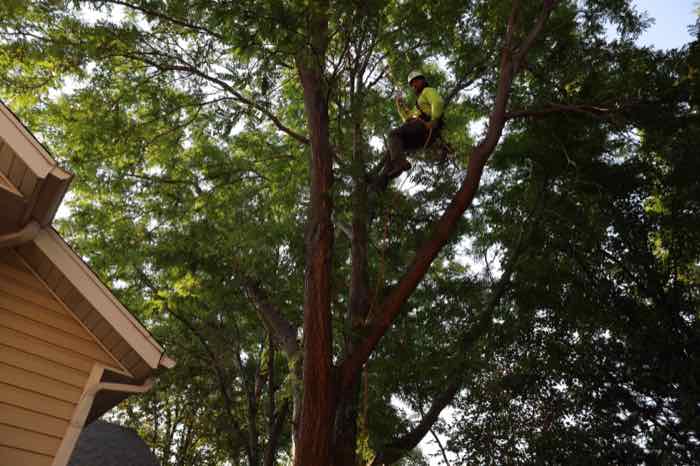
How our tree maintenance plans work
- We walk the property with you. An ISA Certified Arborist looks at every tree and listens to your concerns. The estimate is free.
- You get a clear plan. We tell you what needs doing now, what can wait, and when each job should happen.
- We do the work in the right season and clean up when we finish.
- We check back. Maintenance works when it is repeated, so we schedule follow-up visits instead of waiting for the next problem.
What affects the cost of tree maintenance
Tree maintenance across Salt Lake County and the Wasatch Front
- Tree service in Salt Lake City
- Tree service in South Salt Lake
- Tree service in Sugar House
- Tree service in Millcreek
- Tree service in Murray
- Tree service in West Valley City
- Tree service in West Jordan
- Tree service in Cottonwood Heights
- Tree service in Sandy
- Tree service in Draper
- Tree service in Riverton
- Tree service in Lehi
- Tree service in Bountiful
- Tree service in Layton
- Tree service in Ogden
Tree care guides from our arborists
- When to prune trees in Utah
- Utah winter tree care tips
- Spring tree trimming in Utah
- How often to water trees in summer
- Utah tree pests and how we handle them
- Common tree diseases in Salt Lake County
- Signs that a tree is dying
- Seasonal tree safety inspection checklist
- How to hire a certified arborist in Utah
Tree maintenance FAQs
How often should trees be maintained in Salt Lake City?
Mature trees often need professional pruning every three to five years, while young trees benefit from light structural pruning every one to three years as they establish. Watering, mulching, and a seasonal walk-around are yearly jobs. Trees with known problems may need checks more often. An arborist can set the right interval after seeing your trees.
When is the best time to prune trees in Utah?
For most shade trees, late winter while they are dormant is best, starting in mid-January along the Wasatch Front. Apples and pears are usually pruned from mid-February and stone fruits from mid-March. Dead, broken, or diseased branches can come out at any time, and fall pruning is best avoided because it can damage trees. See our guide to when to prune trees in Utah.
How much water do trees need in Salt Lake City?
Established trees need a deep soak at least once a week in dry summer weather, applied slowly enough to wet the soil 10 to 20 inches deep, according to Utah State University Extension. New trees need more frequent watering: Salt Lake City Urban Forestry suggests one to two times a week in spring and fall and two to three times a week in summer. Use a hose or a drip system along the tree’s drip line instead of sprinklers, and keep mulch off the trunk.
Who maintains the tree in my park strip?
In Salt Lake City, trees in the park strip between the sidewalk and the road are city trees. Pruning them requires a permit from Salt Lake City Urban Forestry, which you can reach at (801) 972-7818. Trees on your own property are your responsibility, and our arborists can maintain them.
How much does tree maintenance cost in Salt Lake City?
Typical tree trimming in the Salt Lake City area runs $150 to $600 per tree, depending on size, species, and access, and complex jobs cost more. We give a free estimate before work begins. See our tree trimming cost FAQ for more detail.
Do you offer ongoing tree maintenance plans?
Yes. We offer pruning and maintenance plans so your trees get the right work at the right time of year. Call (801) 262-1596 or request a free estimate and we will walk your property with you.
Are your arborists certified and insured?
We have seven ISA Certified Arborists on staff, and Diamond Tree Experts is licensed and insured. We have served the Wasatch Front since 1967.
Should I maintain a tree or remove it?
If a tree is healthy and structurally sound, maintenance usually makes sense. If it is dead, leaning with lifted roots, split at the trunk, or repeatedly dropping large limbs, removal may be the safer choice. An arborist can tell you which applies. See signs that a tree is dying and our tree removal service.

