Storm Damage Cleanup In Salt Lake City And Along The Wasatch Front
Storm damage cleanup is the work of clearing fallen trees, broken limbs, and debris after a storm and making the property safe again. Some of it is an emergency. Some of it can wait a day.
The trick is knowing which is which, and not making a bad situation worse while you figure it out.
We’ve handled storm cleanup on the Wasatch Front since 1967. We know what a Utah windstorm does to an old cottonwood, and we know what’s actually dangerous versus what just looks bad.
The Storms That Wreck Trees Here
Utah trees don’t fail for one reason. They fail a few different ways, and the season tells you which.
Canyon wind is the big one. Events push down off the benches fast and hit the older, taller trees hardest. Cottonwoods take the worst of it because the wood is brittle and the canopy is dense. A limb that looked solid comes down without warning.
Then there’s the snow. Heavy wet snow in October and November loads the branches before the trees have dropped their leaves. That combination, full canopy plus wet snow, snaps limbs and sometimes takes the whole top out of a tree.
Ice does its own damage in the cold months, building weight on branches until they crack. Lightning splits trunks outright. Saturated soil after a hard rain loosens the root plate, and a tree that stood fine for forty years tips over in ground that won’t hold it anymore.
Different cause, same result. Something heavy is now down where it shouldn’t be.
What To Do In The First Hour
Move people back first. Before anything else.
If a line is down, or a limb is tangled in a line, treat it as live and stay far away from it. Call the utility, not a tree service, for anything touching a power line. Downed lines aren’t a cleanup job. They’re an electrocution risk until the power company clears them.
Get your free ESTIMATE
Give Us a Call: (801) 262-1596
Why A Hanging Limb Is Worse Than A Fallen One
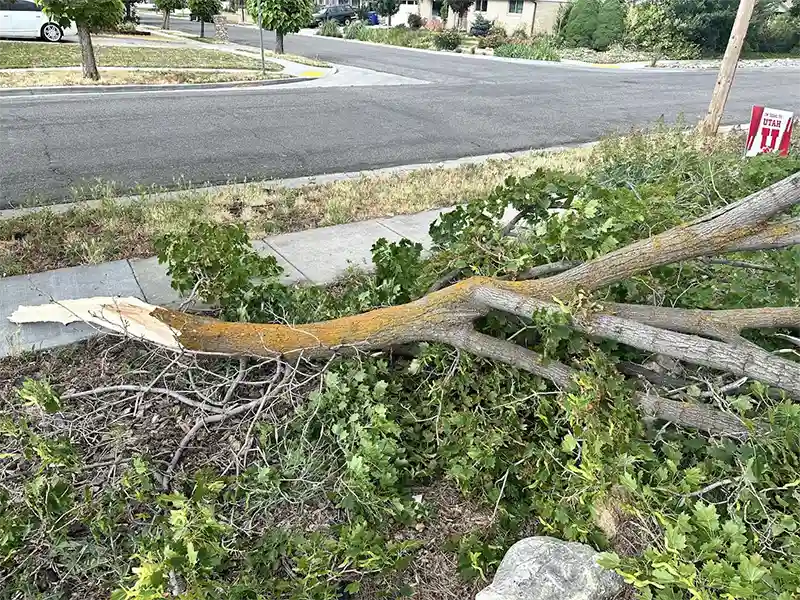
A branch on the lawn has already done what it’s going to do. A branch still hanging in the tree hasn’t.
Those hangers, still connected at a hinge of bark or a strip of wood, hold their full weight up in the canopy with nothing reliable holding them there. Wind moves them. Gravity works on them. When they let go, they drop with no warning and no way to predict where.
Once people are clear, take photos. Wide shots and close-ups, before anything gets moved. You’ll want them for your insurance claim, and the pile looks a lot smaller in a photo taken after the fact.
Then look up. The most dangerous thing after a storm usually isn’t the limb already on the ground. It’s the one still hanging, half attached, waiting. Nobody should walk under that. Not to grab the mail, not to move a car.
That’s the point to call us.
A trunk that’s cracked near a structure is the same kind of problem. It failed once. Under the next wind event, or the next load of snow, it’s more likely to fail again, and worse.
Our crews clear the immediate hazard first, then look at what’s left standing. A tree that partly failed isn’t automatically a removal. Sometimes it is. Sometimes it can be cut back and saved. You get a straight read on which.
How We Handle The Cleanup
Storm work is tight, awkward work. Trees come down across fences, onto roofs, into the space between two houses where there’s no room to drop anything.
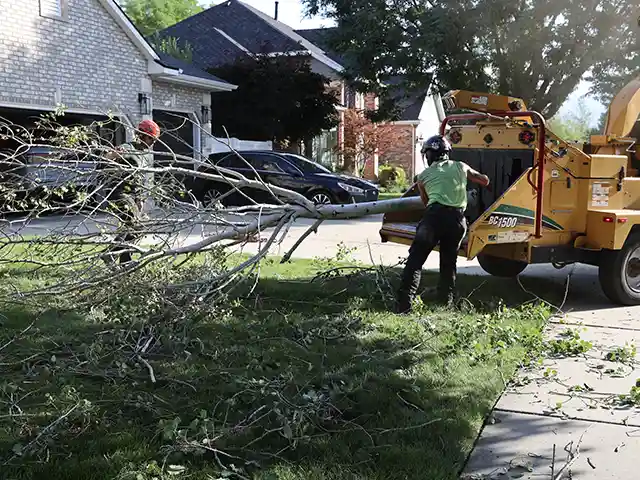
So we section it. Controlled cuts, lowering pieces instead of dropping them, working a downed trunk apart in a way that doesn’t add to the damage that’s already there. A trunk resting on a roof gets taken off in pieces, not shoved.
We bring the equipment the job needs. A large removal near a structure isn’t a chainsaw-and-hope situation. It takes a crew that has done it before, in these lots, on these streets.
After the hazard is gone, we clear the debris. All of it. Limbs, trunk sections, the mess spread across the yard.
And it doesn’t go to a landfill. We run our own green waste and mulch operation here in Utah, so the wood that comes off your property gets ground into mulch.
Storm Damage And Your Insurance
This part trips people up, so here’s the short version.
Homeowners insurance usually covers tree removal when a covered peril, like wind, lightning, hail, or the weight of snow and ice, brings a tree down onto a covered structure. Your house, garage, shed, or fence.
Here’s the catch most people miss. If the tree falls in your yard and hits nothing, removal often isn’t covered, even if the tree is clearly down. And there’s a limit. Many policies cap total debris removal at a percentage of your dwelling coverage, and cap what they’ll pay per tree.
There’s a negligence angle too. If a tree was obviously dead or rotting and you left it, and then it came down, the insurer can push the cost back on you as a maintenance failure. Which is the argument for dealing with a hazard tree before the storm does.
A tree on your car is its own thing. That’s usually an auto claim under comprehensive coverage, not your home policy.
We’re not your adjuster, and every policy reads differently, so check yours. What we do is document the work and the damage with photos so you have what the claim needs.
Getting Storm Cleanup Done Right
If a tree or limb is down on your home, hanging over your yard, or a trunk near the house has a fresh crack in it, that’s the point to call. Don’t wait for the next storm to finish what the first one started.
We’ll clear the immediate danger, tell you straight what happens to the rest of the tree, haul the debris, and give you the photos for your claim.
Fifty seven years on the Wasatch Front. ISA certified arborists. Ready when the weather turns.
Serving Salt Lake, Davis, Utah, and Weber counties.
Frequently Asked Questions
What Should I Do First After A Tree Falls On My Property?
Get people away from the tree and check for power lines before anything else. A downed tree often comes with hazards like leaning trunks, hanging branches, and downed power line areas. Treat any line as live, keep your distance, and call the utility for that part. Once people are clear, take photos for insurance, then call a tree service for anything hanging or resting on a structure.
Does Homeowners Insurance Cover Storm Damage Tree Removal?
Usually, but only under specific conditions. Home insurance generally covers removal when a covered peril like wind, lightning, or fire brings a tree down onto your home or another insured structure. If the tree falls in your yard and doesn’t damage a covered structure, removal typically falls to you. Policies also cap what they pay, often $500 to $1,000 per tree with a total limit per storm. Check your own policy for the exact terms.
Why Is A Hanging Branch More Dangerous Than One On The Ground?
A hanging branch hasn’t finished falling yet. It’s still holding its full weight up in the canopy on a broken hinge, and wind or gravity can drop it with no warning and no way to know where it lands. A branch already on the ground has done its damage. The hanger is the one that hurts someone walking under it, which is why it should come down before anyone uses that part of the yard.
Can You Come Out At Night Or Right After A Storm?
Yes, storm work often can’t wait for business hours. When a trunk is on a roof or a limb is blocking access, the hazard has to be cleared fast. Call us and we’ll respond, clear the immediate danger, and assess what’s left standing.
What Kinds Of Storms Cause The Most Tree Damage In Utah?
Wind and heavy wet snow do most of the damage along the Wasatch Front. High winds uproot trees and break large branches, and wet, heavy snow snaps limbs and topples entire trees, while ice loading and lightning cause their own breakage. Older cottonwoods take the worst of the canyon wind because the wood is brittle. Fall snow that lands before the leaves drop is especially hard on trees.
Do You Haul Away The Debris?
Yes. We clear all the storm debris, from hanging limbs to downed trunk sections and the mess across the yard. We run our own green waste and mulch operation in Utah, so the material gets recycled into mulch instead of going to a landfill.
Should A Cracked Or Leaning Tree Be Removed After A Storm?
Not always, but it needs a professional look right away. A tree that partly failed is more likely to fail again under the next wind or snow load, so a fresh crack near a structure or a new lean is a call worth making. Sometimes the tree can be cut back and saved, and sometimes it should come out. Our arborists give you a straight read on which.