Commercial Site Clearing
Bigger scope. Retail sites, apartment and multifamily developments, HOA common areas that need a reset, municipal projects.
These come with tighter deadlines usually, and permitting tied to a broader development timeline, so scheduling and equipment availability matter more here than they do on a residential lot.
We work directly with contractors and developers on this kind of job and scale crew size and equipment to whatever the acreage and deadline require.
Commercial clearing jobs also generate a lot of vegetation volume, and our green waste and mulch recycling operations handle that instead of it going straight to a landfill.
Tree, Stump, and Shrub Removal
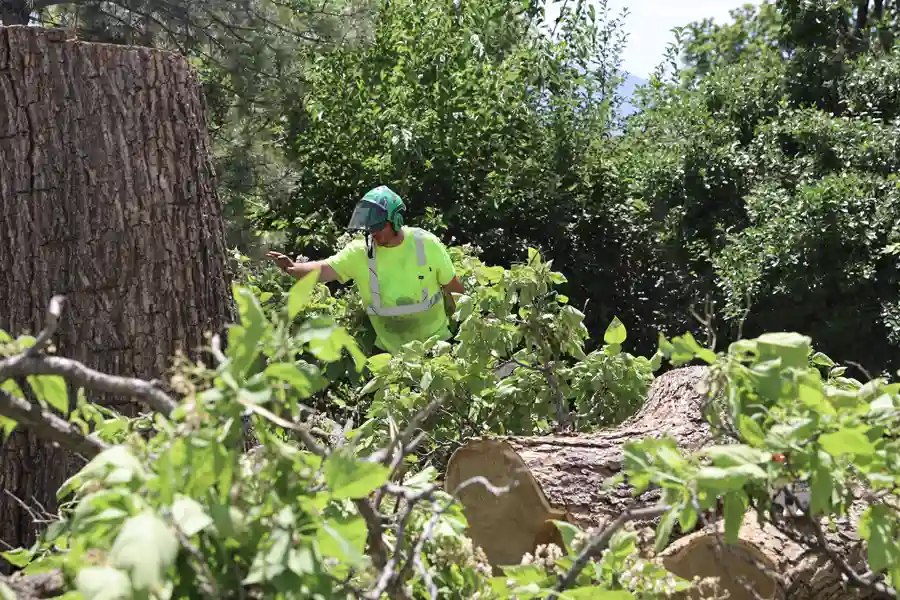
Clearing a site usually means dealing with three things: standing trees, stumps, either from this job or a previous removal, and shrubs or overgrown landscaping.
Leaving stumps in the ground is one of the more common mistakes we see on DIY or half-finished clearing attempts.
A stump left behind keeps sending up root sprouts. It can attract carpenter ants and other pests. And it’s just in the way if the land’s getting graded or built on next.
We grind below grade so the ground’s actually usable for whatever comes after.
Shrubs are their own headache sometimes, especially older, established shrub lines with root systems that have spread well past what’s visible above ground.
Cut the top growth and leave the roots, and you’ll likely see it come back within a season. That’s a wasted trip.
Where the Debris Goes
Everything that gets cleared has to go somewhere. Hauling debris off-site is part of most clearing jobs, and we take it to our green waste facilities in South Salt Lake, Magna or Ogden, where it gets processed into mulch instead of landfilled.
If a property owner wants to keep some material on-site, we can leave chipped wood behind for mulch around whatever trees or landscaping are staying.
People consistently underestimate how much debris comes off a clearing job.
Half an acre of brush and a handful of mature trees generates more material than most people picture in their head before the work starts.
That’s part of why we look at a site in person before quoting instead of pricing it over the phone.
Equipment used for Land Clearing
What we bring depends on the job. Small residential clearing might just need chainsaws, a chipper, and a stump grinder.
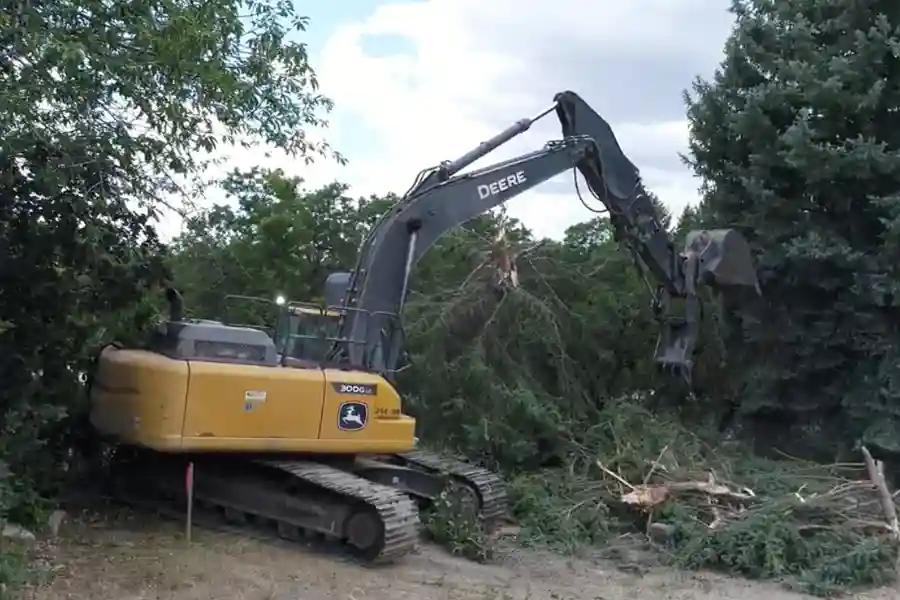
Bigger acreage or commercial sites need heavier equipment, excavators for stumps and root systems, brush mowers for dense underbrush, grinding equipment sized to whatever volume is coming off the property.
We size the equipment to the job. Running heavy machinery on a small residential lot when it’s not needed usually causes more damage to the site than it saves in time.
Access and Site Conditions
Access changes everything about cost and approach, more than most other factors on a clearing job honestly.
A lot with a wide driveway and open space to stage equipment clears completely differently than a landlocked parcel you can only get into through a narrow gate or across a neighbor’s property.
Steep grades, wet ground, proximity to a fence line or utility lines, all of it changes what equipment we can actually use and how the work gets sequenced.
We look at access and site conditions before quoting anything.
A job that looks simple on paper gets complicated fast once equipment actually has to get onto the property and maneuver around what’s there.
Utility lines, overhead or buried, need to get identified before anything heavy starts moving, and skipping that step is how expensive mistakes happen.
Where We Perform Land Clearing in Utah
Diamond Tree Experts clears land throughout Salt Lake, Utah, Davis, and Weber counties, residential, commercial, HOA, and municipal properties from Salt Lake City and South Salt Lake through Sandy, Draper, Murray, Ogden, and the rest of the Wasatch Front.
Frequently Asked Questions
Is land clearing different from tree removal?
Yes. Tree removal is about individual trees. Land clearing is the bigger picture, trees, brush, stumps, shrubs, debris, usually across a lot getting prepped for construction, agricultural use, or general cleanup.
Do I need a permit to clear land in Utah?
Depends on the county, the parcel size, and what the land’s being cleared for. We check permit requirements before starting, since it varies across Salt Lake, Utah, Davis, and Weber counties.
Will healthy trees get left standing?
If that’s what you want, yes. We assess which trees are worth keeping and clear around them, unless a full clear is the goal.
What happens to the debris?
Usually hauled to our green waste facilities in South Salt Lake, Ogden or Magna and processed into mulch. We can also leave chipped material on-site if you’d rather keep it.
How is pricing figured out?
Acreage, how dense the vegetation is, access, equipment needs, debris volume. We look at the site in person before quoting because these vary too much property to property to price blind.