
The fastest growing trees in Utah that reliably thrive in the state’s alkaline clay soil and harsh climate zones are the Hybrid Poplar (5–8 ft/year), Hybrid Elm (up to 6 ft/year), Green Giant Arborvitae (3–5 ft/year), Autumn Blaze Maple (3 ft/year), and Common Hackberry (2–3 ft/year).
But fast growth only matters if the tree stays healthy after it is planted. Utah’s soil, water stress, pests, and temperature swings can all affect how well a young tree establishes, which is why ongoing tree health care is important if you want that new shade tree or privacy screen to survive long term.
Don’t rely on some handwritten nursery sign that recommends rapid growers that fail during a brutal Wasatch Front winter.
Instead, choose one of these specific regional trees that are proven to survive local conditions.
Another thing to consider. If you want to establish an immediate privacy screen, block out neighbors, or create backyard shade without waiting a decade, you must choose varieties that can handle Utah’s high-pH soils and heavy canyon winds.
The trees listed below fit that criteria.
Below is a breakdown of the fastest growing trees in Utah that will quickly transform your property without dying off during the first harsh winter freeze.
5 Fastest Growing Trees in Utah
1.Hybrid Poplar (Populus deltoides x Populus nigra)
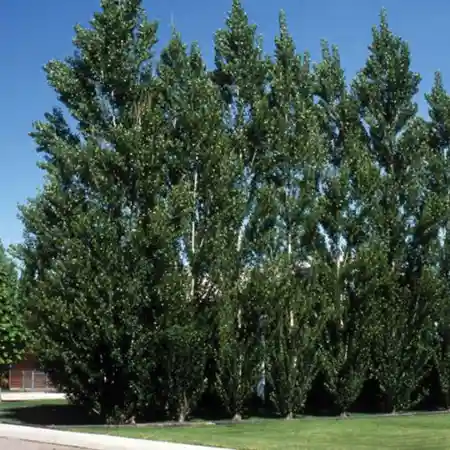
- Growth Rate: 5 to 8 feet per year.
- Best For: Instant privacy screens and property boundaries.
- Utah Climate Fit: These trees offer the absolute fastest route to a mature visual barrier. They grow dense and tall incredibly quickly. However, they have brittle wood. Plant them in areas shielded from the most violent canyon winds, and give them plenty of room away from your home’s foundation.
2.Autumn Blaze Maple (Acer x freemanii)
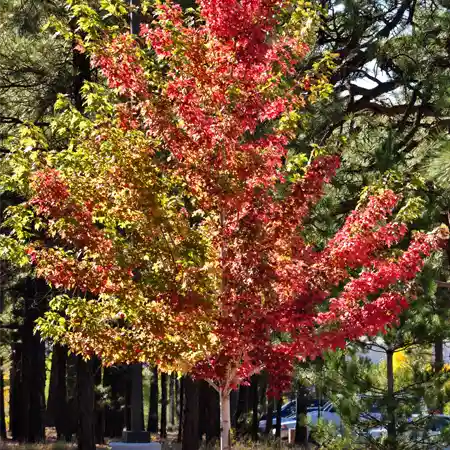
- Growth Rate: 3 feet per year.
- Best For: Thick, brilliant red backyard shade.
- Utah Climate Fit: This is a favorite along the Wasatch Front for good reason. It combines the rapid growth of the Silver Maple with the gorgeous fall color of the Red Maple. It adapts well to regional soil conditions and features tough branches that handle heavy winter snow loads without snapping.
3.Green Giant Arborvitae (Thuja standishii x plicata)
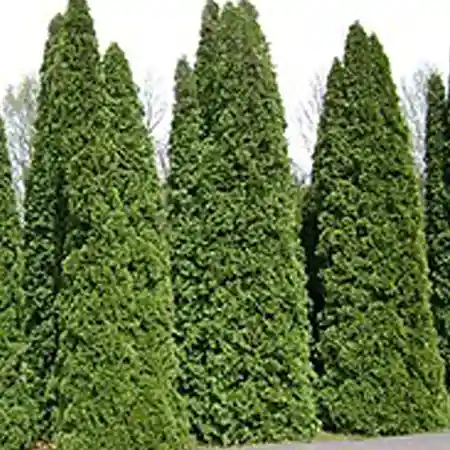
- Growth Rate: 3 to 5 feet per year.
- Best For: Evergreen privacy hedges that block out neighbors year-round.
- Utah Climate Fit: Unlike many delicate evergreens that suffer from winter burn in the high desert, the Green Giant is incredibly resilient. It retains its deep green color all winter and shrugs off heavy snow accumulation. Just ensure you give it occasional deep watering during unusually warm, dry winter weeks.
4.Hybrid Elms (Ulmus)
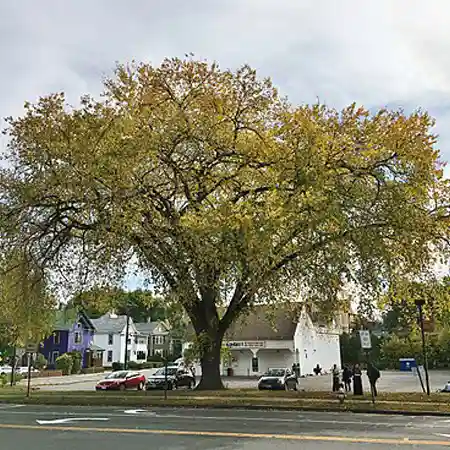
- Growth Rate: Up to 6 feet per year.
- Best For: Massive canopies to reduce home cooling costs.
- Utah Climate Fit: Forget the old, disease-prone elms of the past. Modern hybrid cultivars like ‘Accolade’ or ‘Frontier’ are highly resistant to pests and diseases. They tolerate the high-pH, alkaline soils of northern and central Utah beautifully while establishing massive shade canopies at lightning speed.
5.Common Hackberry (Celtis occidentalis)
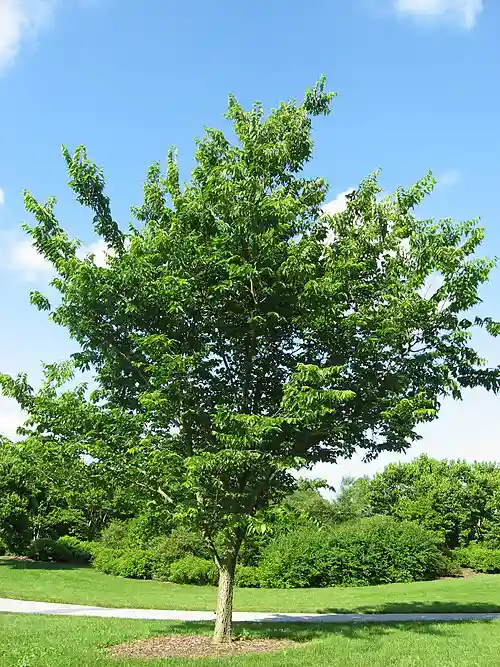
- Growth Rate: 2 to 3 feet per year once established.
- Best For: Low-maintenance shade that survives anything.
- Utah Climate Fit: If you have heavy, poor-draining clay soil that kills other trees, the Hackberry is your best bet. It is tough as nails, highly drought-tolerant once its root system takes hold, and thrives in intense summer heat waves.
Pros Tips for Planting Trees in Utah’s Unique Climate
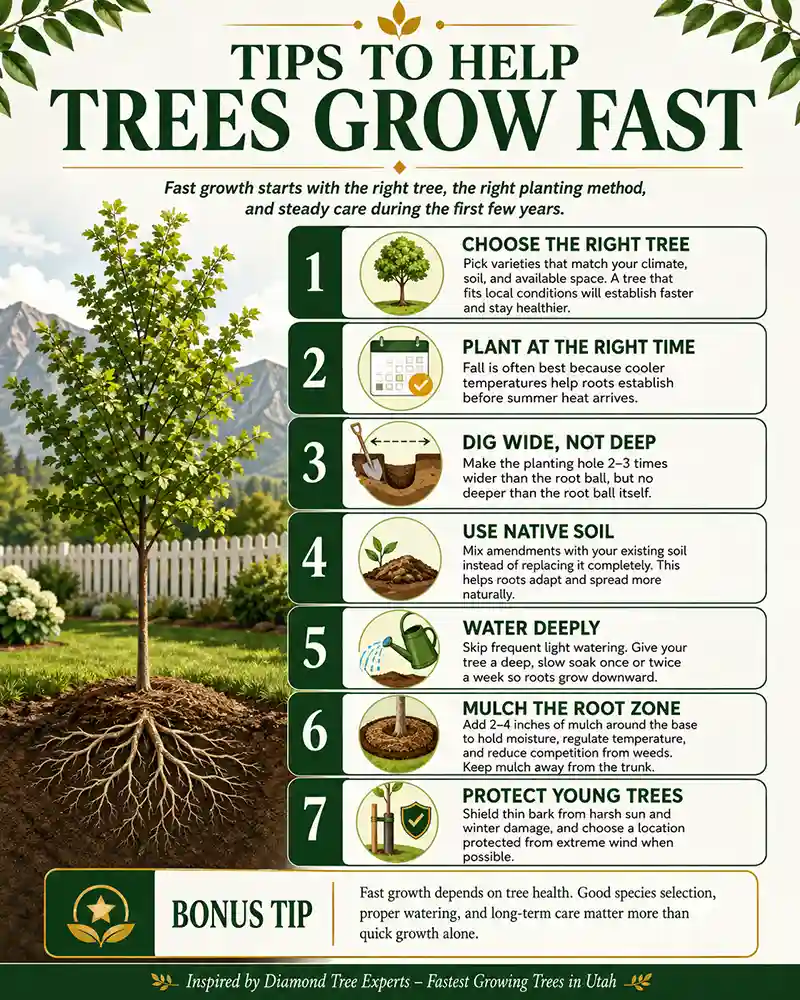
Plant in the Fall to Avoid Summer Shock
- Target the tree planting autumn months (September through October) so root systems can develop in cool, moist soil before facing intense high-desert summer heat.
Protect Thin Bark from Winter Sunscald
- Sun scald is caused by the freezing of bark following high winter temperatures, resulting in permanent visible damage to the bark. Wrap young trunks from November to April to block bright snow reflections that freeze and thaw bark rapidly, causing tissue death.
Master the 50% Native Soil Rule
- Mix your organic soil amendments half-and-half with your dug-up native Utah clay rather than backfilling with 100% bagged potting soil.
Identify Your Property’s Microclimates
- Account for elevation and canyon winds, as a tree thriving on a protected south-facing wall may freeze to death on an exposed mountain bench.
Diamond Tree Experts – Tree Pros for over 50 Years in Utah
You do not have to navigate the challenges of tough local clay soil and harsh mountain climates alone.
Whether you need help selecting the perfect rapid-growth variety, planting a new privacy screen, or maintaining your existing canopy, trust the local specialists who have kept the Wasatch Front green for over five decades.

