Shrub Trimming And Removal In Salt Lake City And Along The Wasatch Front
Shrub trimming and removal is two jobs. One keeps a shrub cut back and healthy. The other pulls it out for good when it’s overgrown, dead, or planted in the wrong spot.
Most people wait too long on both. A shrub you could have kept in line with one good cut every couple years turns woody and half dead, and now it has to come out.
We’ve done this work on the Wasatch Front since 1967. The thing that decides whether it turns out right is simple. Know the shrub. Know when to cut it.
What An Overgrown Shrub Does To The Rest Of Your Yard
Overgrown shrubs don’t just look rough. They block sun from the plants next to them. Those neighbors lose light and root room and start to fade.
Thick, unpruned growth traps moisture. Against the plant, against your siding, against the foundation. That’s how you get mold and fungus and bugs moving in.
A shrub jammed against the house lets insects walk straight onto your siding and gives mice somewhere to hide. Foundation shrubs like juniper and burning bush are the worst for it, because people plant them small and forget how big they get.
There’s a plant health cost too. A flowering shrub that never gets pruned goes woody. Little new growth, fewer flower buds, and the bloom thins out year after year.
Lilacs are the usual example. Leave one alone long enough and you get a stack of bare gray stems with a few flowers way up top where nobody sees them. Scale and borers move into the old wood while you’re at it.
The Timing Mistake That Costs You Next Year’s Flowers
This is the one people blow more than any other. When you cut matters as much as how. And it comes down to one question. Does the shrub bloom on old wood or new wood?
Get your free ESTIMATE
Give Us a Call: (801) 262-1596
Spring bloomers set their buds the summer before. Lilac, forsythia, mock orange, snowball viburnum. Prune those right after they finish flowering.
Cut them in fall or winter and you’re taking off next spring’s flowers before they open. The buds are already sitting on the branch. You just can’t see them.
Summer bloomers work backwards from that. Spirea, potentilla, Rose of Sharon, blue mist. They flower on growth from the current year. So you cut them in late winter or early spring before they wake up, and you can take them back hard if you need to.
Evergreens are their own deal. Juniper and yew get pruned in early to mid spring before the new growth pushes. Boxwood takes a light shaping in late spring once it’s growing again.
One more line on the calendar. Don’t prune from the middle of August through leaf drop. Pruning tells the plant to grow. New growth that late won’t harden off before the cold hits, and it gets damaged.
The only thing you cut in that window is dead, diseased, or broken wood. That comes off any time.
Why We Don’t Shear Everything Into A Green Ball
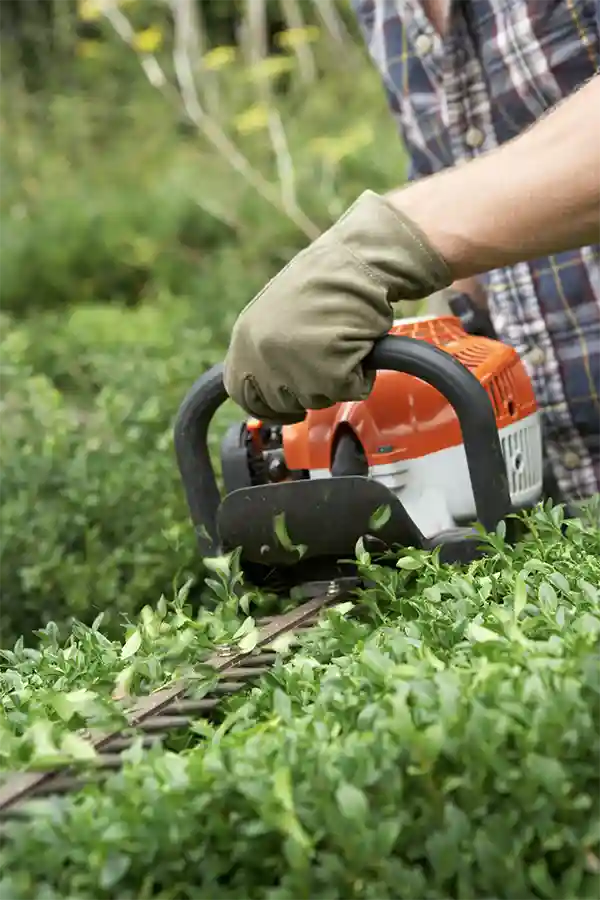
Hedge shears are fast. That’s the whole problem. Run shears over the outside of a shrub every time and you build a tight green shell around a hollow, leafless, dead middle.
Most shrubs shouldn’t be sheared into shapes at all. It ruins the natural form. It cuts down the leaves and flowers inside the plant. And it kicks out a cluster of weak little shoots at every cut tip.
A few plants take shearing fine. Privet, alpine currant, barberry. Those need it twice a year to hold the look, so know what you’re signing up for.
Everything else does better by hand. Thinning cuts. You take individual stems back to where they start. That opens the plant to light and air, drops the size, and keeps the shape it’s supposed to have.
Slower work. Looks right for years instead of a few weeks.
When A Trim Won’t Fix It Anymore
Some shrubs are too far gone for a normal cut but not gone enough to pull. That’s where hard pruning comes in. Two versions.
Renewal is the slow one. Take out about a third of the oldest stems at ground level, one year at a time, over three years. You end up trading the whole plant for younger wood without ever leaving a bald spot.
Rejuvenation is the blunt one. Cut the entire shrub down to about six inches off the ground in early spring before it wakes up. It grows back from the roots, compact and young. You do this maybe once every three to five years, not more.
There’s a catch. Hit a spring bloomer with a full rejuvenation cut and you lose the flowers for two or three years while it rebuilds. The plant comes back healthier. You just lose the bloom while it does.
And here’s the honest limit nobody likes hearing. Pruning only controls size so far. If a shrub wants to be ten feet and you keep cutting it back to fit a four foot space, you’re fighting it forever.
Better to pull it and put in a dwarf that actually fits. When we walk your yard, that’s sometimes the call. Not another trim. A different plant.
How We Actually Remove A Shrub
Removal isn’t cutting a shrub off at the dirt. Leave the roots and it comes back.
Any chunk of root left behind throws up new shoots, and the thing regrows leggy and spreading, usually worse than before. The old stump rots in place too, which pulls in carpenter ants and beetles you’d rather keep away from the house.
So we cut the branches back, take the base down low, then dig out the root ball and the main roots. Branches come off with a saw. A shovel does the root work on most shrubs. A big one, or a wide root mass, might need a skid steer.
Utah clay makes this harder than it sounds. It’s alkaline, it drains slow, and it grips roots tight. An established shrub in that soil can run roots wider than the plant is tall.
Deep rooted species fight you more than shallow ones. Easiest time to pull one is spring or fall, when it’s bare and light.
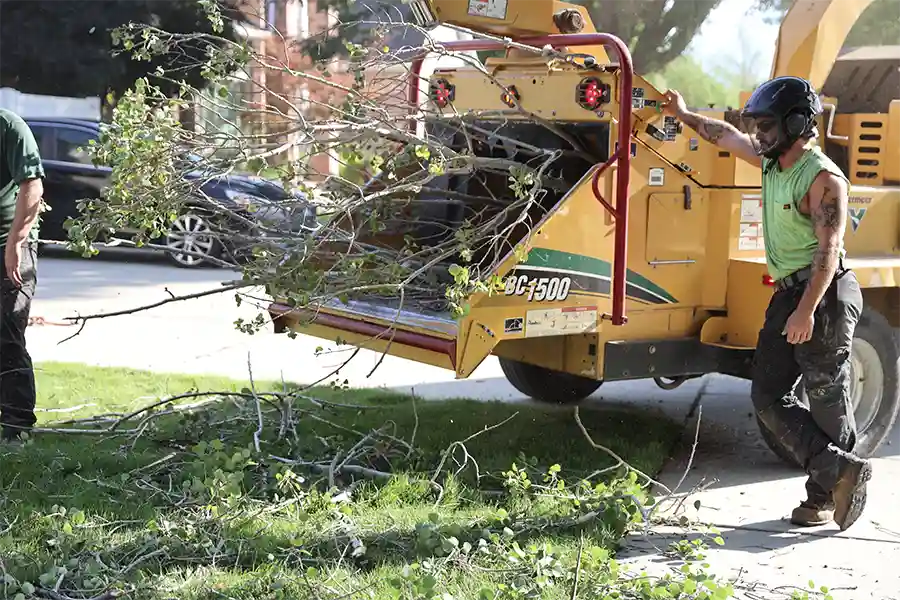
Then there’s the pile of wood left over. We haul it. We run our own green waste and mulch yard here in Utah, so what comes off your property gets turned into mulch instead of dumped.
What Shrub Removal Costs
Price moves with size, roots, access, and how many you’ve got.
Ballpark, a shrub two to six feet runs somewhere around $25 to $150 a plant. A big bush, $60 to $250. Hedge removal lands near $40 to $150 for every five feet of length.
Up in the north end of the valley, a mixed trim and removal job commonly falls between about $500 and $1,350, depending on what’s involved.
Deep roots cost more. So does grinding the stump out, and that’s the part that actually stops the regrowth.
The only way to price yours straight is to look at the real shrubs, the soil, and how we get to them. That’s what the free estimate is for.
Getting Shrub Trimming And Removal Done Right
If your shrubs are overgrown, blocking a window or a walkway, thinning out at the flowers, or shoved up against the house, deal with them now. Not in two years when pulling them is the only move left.
We’ll come out and tell you which shrubs are worth saving with the right cut and which ones should go. We cut them on the schedule that fits what they actually are. And we haul the mess when we’re done.
Over fifty seven years on the Wasatch Front. ISA certified arborists. A straight answer on what your yard needs.
Frequently Asked Questions
What’s The Best Time To Trim Shrubs In Utah?
It depends on when the shrub blooms. Spring bloomers like lilac and forsythia get cut right after they flower, because they bloom on buds that formed the previous summer, and pruning in fall or winter removes those buds. Summer bloomers like spirea and potentilla get cut in late winter or early spring, since they flower on the current year’s growth. Evergreens like juniper and yew get shaped in early spring before new growth pushes. And skip pruning from mid August through leaf drop, because the new growth won’t harden off before winter and gets damaged by the cold. SDSU Extension + 2
Will A Shrub Grow Back If You Don’t Dig Out The Roots?
Yes, and that’s the main reason removals fail. Any part of the root system left behind sends up new shoots and regrows the shrub with leggy, spreading growth. To take one out for good, the root ball and the main roots have to come out, not just the top. Leaving the stump also invites rot and the insects that come with it.
How Much Does Shrub Removal Cost?
Most single shrubs run somewhere in the low hundreds, depending on size and roots. A shrub two to six feet tall averages about $25 to $150, a large bush runs $60 to $250, and hedge removal lands near $40 to $150 per five feet of length. In the north end of the valley, a combined trim and removal job commonly falls between roughly $500 and $1,350. Deep roots and stump grinding add to it. We price off the actual shrubs and access, not a phone guess.
Can You Cut A Shrub All The Way Down To The Ground And Have It Come Back?
Yes, on many shrubs that’s a real technique called rejuvenation pruning. You cut the whole plant to about six inches off the ground in early spring before growth starts, and it regrows from the roots compact and young. It’s done no more than every three to five years. The trade is that a spring bloomer won’t flower for two or three years while it rebuilds.
Should I Trim My Shrub Or Just Remove It?
Trim it if it’s healthy and roughly the right size for the spot, remove it if it’s dead, diseased, or fighting the space it’s in. Pruning only controls size so far, so a shrub that wants to be ten feet in a four foot space is better replaced with a dwarf variety than trimmed forever. When we look at your yard, we’ll tell you straight which shrubs are worth keeping and which ones should go.
Why Shouldn’t I Just Shear My Shrubs Into Shape?
Shearing everything into balls or boxes builds a green shell around a hollow, dead center. On most deciduous shrubs it wrecks the natural form, cuts down leaves and flowers inside the plant, and triggers a mess of weak shoots at the tips. Only a few plants like privet, alpine currant, and barberry take shearing well, and they need it twice a year. Everything else does better with hand thinning cuts.
Do You Haul Away The Branches And Debris?
Yes. We haul off everything we cut or pull. We run our own green waste and mulch operation in South Salt Lake, Magna and Ogden, so the material gets recycled into mulch instead of going to a landfill.