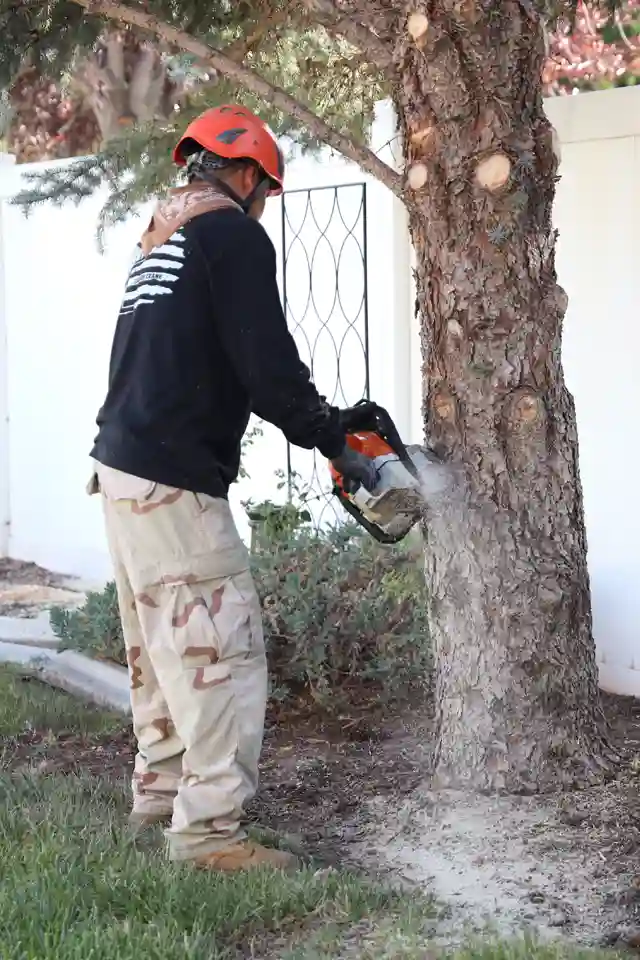
Arborist Services in Sandy, Utah

Most tree failures don’t come out of nowhere. There was a defect sitting there for years, usually, and nobody looked closely enough to catch it. 

That’s what an arborist actually does that a regular tree crew doesn’t: look closely before anything gets cut.

Diamond Tree Experts provides arborist services Sandy Utah in zips 84070, 84094, and out into the rest of Salt Lake County.

We have four ISA-certified arborists on staff. They evaluate the tree first, health, structure, root condition, whatever’s going on, and then tell you what actually needs to happen. 

Sometimes that’s trimming. Sometimes it’s a treatment. Sometimes we tell you the tree’s fine and to save your money. 

Call (801) 262-1596 if you want someone to come take a look at your tree issue.

Arborist vs. Tree Service Company: What’s the Difference

There’s a real difference here and it gets lost a lot. 

A tree crew shows up, removes what they’re told to remove, grinds a stump, cleans up, leaves. That’s a service, and it’s a fine one when that’s what you need. 

An arborist does something different. 

Before anything happens with a saw, they’re looking at canopy structure, root health, soil, how close the tree is to your house or a power line, whether there’s disease pressure building that hasn’t hit the leaves yet.

ISA certification isn’t something you pick up by owning good equipment. It’s testing on tree biology, pruning standards, risk assessment, the whole science side of it. 

Get your free ESTIMATE

Contact Us

Give Us a Call:  (801) 262-1596

Diamond Tree Experts has four certified arborists on staff, which honestly puts us ahead of a lot of companies working this same stretch of the Wasatch Front.

Where this actually matters for Sandy homeowners: mature trees. The ones planted back in the 60s or 70s that nobody’s ever had properly looked at. 

A tree like that can look completely fine from the driveway and still be sitting on included bark at a major branch union, or dealing with root damage from a driveway repair three years ago, or fighting off a disease that hasn’t shown up visually yet. 

A trim crew walks past that stuff. An arborist doesn’t, because that’s specifically what they’re trained to catch.

When to Call an Arborist in Sandy: Leaning Trees, Dieback, and Included Bark

Not every tree needs a full evaluation. Most don’t, honestly. But there are specific situations where skipping it just costs you more down the road, and it’s worth knowing what those look like.

A tree that’s started leaning when it wasn’t before. That’s one. Dieback up in the crown, or needle loss that’s only happening on one side of a pine or spruce. Co-dominant stems on a big tree where you can actually see included bark at the union. Any kind of digging or grading happening within about 15 feet of a mature tree’s roots. A tree that hasn’t been looked at in three years or more. Decline that doesn’t have an obvious cause. Storm damage where you’re not sure if what’s left is still sound. That construction one comes up constantly right now. People are remodeling, redoing landscaping, trenching for irrigation, right up next to established trees. 

And, root damage from that kind of work doesn’t always show up right away. Could be a year, could be two, before the canopy starts thinning and you realize something happened back when the trenching crew was out there.

arborist services sandy utah

Tree and Plant Health Care: Diagnosing Insect, Fungal, and Soil Issues

A lot of arborist work never involves a saw at all. Half the job is figuring out what’s actually wrong with a tree, which means checking for insects, fungal issues, nutrient problems in the soil, root damage, before anyone decides what to do about it.

Utah soil is rough on trees, honestly. Alkaline clay, which is most of what you’ve got around 

Sandy drains slow and locks up nutrients the tree needs, iron especially. This shows up as yellowing between the veins on species that aren’t built for that soil. 

An arborist catches that and it’s often a soil treatment or amendment, not a removal, even though removal is usually the first thing a homeowner assumes when a tree starts looking off.

Then there’s the bugs and disease side. Bark beetles move through here depending on the year and how dry it’s been. Aphids too. 

Various fungal problems that show up seasonally. Catch it early with a proper evaluation and you’re usually looking at treating the tree. Miss it, and you’re usually looking at losing it.

ISA Tree Risk Assessment: Likelihood of Failure and Target Analysis

Here’s the thing about tree failures around Sandy: they’re rarely random. Something is usually wrong with the tree fro ahwile. A weak branch union that got weaker. A lean that got a little worse every year until it wasn’t subtle anymore. Root damage that nobody noticed because it’s underground and invisible until the tree starts showing stress above ground.

A proper risk assessment looks at the whole tree. Trunk condition. Root flare. How balanced the canopy is. And critically, what’s underneath it, because a dead limb hanging over open grass is a completely different risk than the same limb over your driveway where the car sits every single night.

This shows up most with the older cottonwoods and maples around places like Historic Sandy and near Dimple Dell. 

Cottonwoods grow fast and get big, and the wood’s genuinely soft, brittle almost, compared to other species. A branch can look completely attached and still fail under snow load without giving you any warning first. Part of what an arborist does is look at how branches attach, check wood condition, and flag that risk while there’s still time to do something about it.

This isn’t guesswork either. ISA has actual standards for this: likelihood something fails, how big that piece is, what happens if it lands where it’s going to land.

Our Services

large tree removal

Tree Removal

tree trimming

Tree Trimming

stump grinding

Stump Grinding

mulch

Mulch Products

green waste dumping

Green Waste Dumping

demolition

Demolition

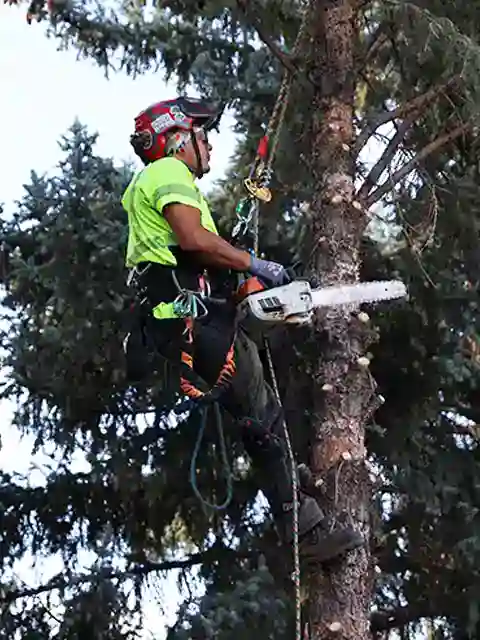
man performing arborist services sandy utah

Tree Species Common to Sandy, Utah: Cottonwood, Maple, Scrub Oak, and Austrian Pine

Cottonwoods are everywhere in the older Sandy neighborhoods. Fast growers, get big fast, soft wood. Branch failure is more common with these than with a denser hardwood.

Maples fill in a lot of the mid-century streets. Silver maples and Norway maples both tend toward included bark at branch unions, which you can’t really see from the ground and which becomes more of an issue once the tree’s past 40 feet or so.

Scrub oak’s common up in the canyon-adjacent lots, around Alta Canyon and Bell Canyon especially. It’s tougher, handles drought better than the valley species, but it still needs structural pruning periodically, particularly where it’s grown right up against a house.

Austrian pine and spruce cover a lot of the 70s and 80s-built yards. These deal more with insect pressure than structural failure, bark beetles mostly, and that gets worse in drought years.

What Happens When Tree Risk Assessment Is Skipped

Sometimes a homeowner calls wanting a trim when what the tree actually needed was a health evaluation first. Sometimes people just wait, figure the tree’s fine until it isn’t. Both cost more eventually. 

A tree that’s been quietly declining for two years is a harder, pricier fix than the same problem caught early. Structural defects don’t heal themselves. They get worse, usually until a wind event or a heavy snow load turns a manageable situation into an emergency call.

There’s a liability angle too, worth mentioning. 

If a tree with a defect that could’ve been caught fails and hits a house, a car, or a person, that’s a different conversation than a tree that failed with genuinely no warning signs. 

Having an arborist evaluation on file matters here, especially for HOAs and commercial or municipal properties managing a lot of trees at once.

Arborist Services We Provide in Sandy, Utah

Here’s a short list of the Arborist Service we provide in Sandy.

  • Health and risk assessments. 
  • Structural evaluations on older trees. 
  • Diagnosing insect and disease problems. 
  • Checking soil and nutrient issues. 
  • Consulting before construction happens near root zones. 
  • Recommending treatment, pruning, or removal based on what we actually find, not a default answer. 
  • Documentation for HOA, commercial, and municipal records.

Arborist Services Serving Historic Sandy, Alta Canyon, Dimple Dell, and Bell Canyon

Historic Sandy, Sandy City Center, Alta Canyon, Dimple Dell, Willow Creek, the Granite area, Bell Canyon, east and west Sandy, 84070 and 84094. Also out in Draper, Midvale, Cottonwood Heights, Murray, and Salt Lake City.

Frequently Asked Questions

What’s the actual difference between an arborist and a tree service?

A tree service does the physical work: trimming, removal, grinding stumps. An arborist evaluates first and tells you what the tree actually needs. We do both here, since our ISA-certified arborists are the same people doing the work.

How often does a mature tree need to be looked at?

Every few years works for most healthy trees. Trees near your house, near property lines, or in high-traffic spots deserve more frequent checks. Anything showing signs of decline shouldn’t wait for a scheduled visit.

Can an arborist actually predict if a tree’s going to fail?

Not exactly, no. What they can do is spot structural defects and conditions that raise the odds. That’s not a guarantee, it’s an informed read based on what’s visible and testable.

Do I need to call before digging near a tree?

Yes, if you’re working within about 15 feet of a mature tree’s roots. Root damage from trenching often doesn’t show up for a year or more, and by then it’s already done.

Is the consultation free?

Yes. Call (801) 262-1596 and we’ll get an arborist out to take a look.

Our Service Area

salt lake city

Salt Lake City

draper

Draper

sandy

Sandy

ogden utah

Ogden

layton

Layton

riverton

Riverton