
What is Bur Oak Blight?
Bur oak blight is a serious fungal disease that damages bur oak trees in South Salt Lake and across Utah. This disease strikes your trees when wet springs arrive and temperatures stay cool. Your beautiful bur oak can lose leaves early, weaken over time, and eventually die if you don’t act fast.
The fungus Tubakia iowensis causes this problem. It has become worse since the 1990s because Utah gets more spring rainfall than before. Your trees need help now, and understanding this disease matters for keeping them healthy and strong.
You’ll learn exactly what bur oak blight looks like, why it happens, and how to stop it. This guide gives you real solutions that work in South Salt Lake’s climate. Keep reading to protect your trees today.
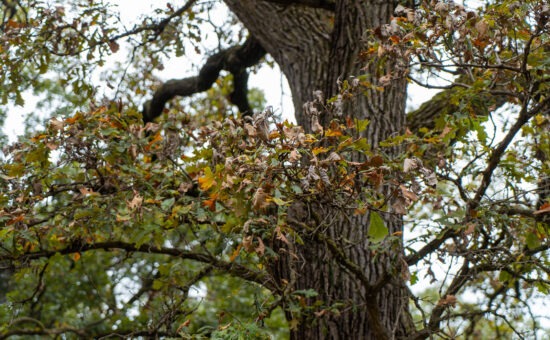
Early Symptoms of Bur Oak Blight
Bur oak blight starts with dark spots on leaves in the lower canopy first. Look for wedge-shaped leaf lesions that form near the leaf tips. These brown marks spread along the leaf veins and turn purple-brown or black.
Your leaves will curl and wilt early. They turn brown from the tips inward. Leaf browning from tips happens in late summer, not spring.
The worst part: infected leaves stay on branches through winter. This helps you spot the disease. Black fungal pustules appear on leaf undersides and petioles. These tiny bumps look like pimples on the leaf stems.
Advanced Symptoms and Long-Term Damage
Progressive defoliation moves from bottom to top as weeks pass. Your tree loses more leaves each year. Branches lose vigor and start to die back.
Twig cankers form where branches connect. Secondary infections follow because your tree gets weaker. Acorn production drops dramatically. Your bur oak stops growing strong.
Repeated yearly infection causes serious tree decline and stress. Pests like the two-lined chestnut borer attack weakened trees. Root rot can develop. Without treatment, your tree dies after several years.
How to Confirm Bur Oak Blight
Visual identification helps, but mistakes happen easily. Bur oak blight looks similar to oak wilt and other diseases. Don’t guess—call a certified arborist instead.
Professionals examine leaf spots and black fruiting bodies under magnification. They collect leaf samples for proper diagnosis. Laboratory testing confirms Tubakia iowensis fungus presence.
Timing matters too. Symptoms appear mid to late summer. Winter leaf retention is a key clue that blight struck your tree.
Causes and Risk Factors
Wet spring conditions trigger infection. Cool, wet weather releases fungal spores from overwintering structures. Rain and wind spread spores to new leaves.
Dense canopy and poor airflow trap moisture. Compacted soil weakens roots. Drought stress makes trees vulnerable. Older trees and genetically susceptible varieties suffer most.
Utah’s Wasatch Front experiences these exact conditions during extended cool springs. Your bur oak’s location matters for disease risk.
Problems Caused by Bur Oak Blight
Tree decline and stress happen fast. Growth slows. Your landscape loses value. Branches weaken and drop limbs unexpectedly.
Susceptibility to secondary infections increases yearly. Borers invade. Rot spreads through the trunk. Property safety becomes a real concern.
Repeated annual infection exhausts your tree’s defenses. Eventually, the tree cannot recover alone.
Treatment Options for Bur Oak Blight
Fungicide treatment works best in late spring. Propiconazole trunk injections target high-value trees. Foliar sprays help younger trees.
Pruning efficacy improves airflow around branches. Remove dead wood in winter or early spring. Never prune during wet periods—this spreads spores.
Deep watering during drought strengthens roots. Mulching keeps soil moist and cool. Good soil health reduces disease impact.
Prevention Strategies for Homeowners
Plant resistant bur oak varieties when possible. Remove fallen leaves to lower spore counts. Rake debris in fall and spring.
Improve soil drainage. Add mulch around the base. Water deeply during dry periods.
Monitor your trees monthly. Catch early symptoms fast. Call Diamond Tree Experts at the first sign of trouble.
Conclusion
Bur oak blight threatens your trees, but early action saves them. Understanding wedge-shaped leaf lesions, leaf vein discoloration, and black fungal pustules helps you spot problems quickly. South Salt Lake homeowners can prevent this disease through proper care and expert guidance.
We are the trusted tree removal company and certified arborist team serving South Salt Lake. Our experts diagnose Tubakia iowensis infections accurately and apply proven treatments. We handle pruning, fungicide applications, and soil care with precision.
Contact Diamond Tree Experts today for a free inspection. We’ll protect your bur oaks and keep your landscape beautiful and safe for years to come.

