Diagnosing Tree Problems in Utah (That You Can Actually Spot)

Diagnosing Tree Problems in Utah (That You Can Actually Spot)

Trees don’t just keel over overnight. Most problems show signs—if you know where to look.  Taking the time to check your tree health can help stave off expensive tree removal and replacement.  Read more on ways to keep an eye on your trees.

Leaves Are Talking (Even When They’re Dying)

If your tree’s leaves are:

  • Turning yellow or brown in mid-summer
  • Covered in spots or curling at the edges
  • Dropping way earlier than they should

…it’s not just “one of those years.” It might be leaf spot, powdery mildew, or even a sign the roots aren’t happy. And if it’s just one tree struggling, it might be species-specific stress. But if multiple trees are acting weird? You might have a bigger issue underground.

Bark Issues: More Than Just Ugly

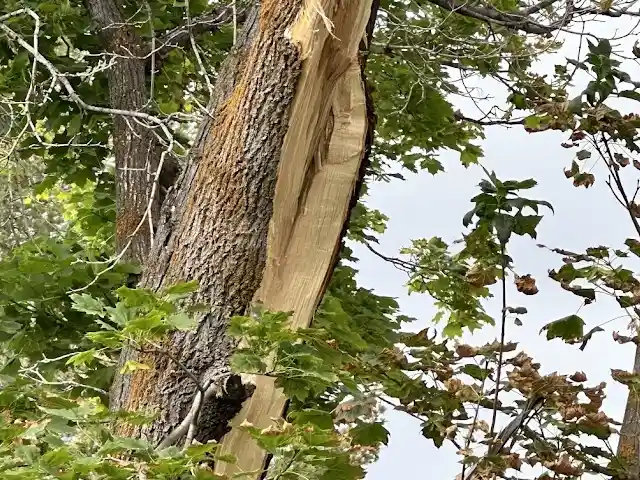
Bark problems aren’t just cosmetic. Bad bark is one of the first things our arborists notice because it is a major distress signal of a diseased tree. 

Here’s a few things look for if you think you Utah tree is in distress:

  • Sunken or cracked bark
  • Sticky sap or dark oozing spots
  • Fungus or mushrooms at the base

Get your free ESTIMATE

Contact Us

Give Us a Call:  (801) 262-1596

Those could point to canker diseases, sunscald, or past physical damage. If you see multiple issues in one spot—or the bark is falling off in big chunks—don’t wait.

Dieback in the Canopy

Dead branches near the top or outer edges of a tree usually mean it’s struggling from the inside out.

Check for:

  • Bare twigs while the rest of the tree is leafy
  • Dead limbs that snap clean
  • Fungi or mushrooms near the roots
diagnosing tree problems in utah

Often tied to root rot, poor drainage, or deep internal decay. If it’s a mature tree, this can go from subtle to serious pretty fast.

Utah-Specific Stress That Hurts Tree Health

Utah isn’t the easiest place for a tree to grow. Even healthy ones are dealing with stuff most people don’t think about.

Drought and Tough Soil

Our dry climate and compacted clay soils are rough on root systems.

If you notice:

  • Leaves wilting even when you’re watering
  • New growth that seems stunted or smaller
  • Patchy canopies in the heat of summer

…it might be more about your soil and watering habits than disease. Water deeply, not frequently. And make sure the soil can actually absorb it.

Cold Snaps and Heat Waves

The temperature swings in Utah are no joke. Spring frosts after warm weeks can kill off new growth. Winter dries out evergreens. Summer heat scorches young trees.

Windburn is also common—especially on exposed sites. You’ll see browning on one side of the tree, almost like a sunburn.

The Heat Bubble Around Cities

In places like Salt Lake and Ogden, heat gets trapped by concrete and buildings. Trees here deal with higher temps and drier air, which adds up to chronic stress. That makes them prime targets for bugs and fungi.

Utah’s Worst Tree Pests and Diseases (and What to Watch For)

Sick trees attract pests. And pests make trees sicker. Here’s what you should know when diagnosing tree problems and Utah tree pests.

Wood-Boring Beetles

If you have ash, birch, pine, or spruce, you’ve got to stay alert for these.

Look for:

  • Tiny holes in the trunk or branches
  • Sawdust near the base
  • Sudden dieback in healthy-looking limbs

The emerald ash borer and bark beetles (Scolytinae) are the biggest troublemakers in Utah right now. Once they’re inside the tree, there’s no DIY fix.

Fungal and Bacterial Infections

These usually show up in spring and thrive with moisture and poor airflow.

What you might see:

  • Light or dark brown, droopy leaves that look scorched (fire blight)
  • Spotted or leaves that have holes in them holey (anthracnose, leaf spot)
  • A form of fuzzy mildew or blackish mold on the surface

If any area of your tree smells weird or feels mushy, it’s probably not good and should be checked by Diamond Tree expert.

Trees That Struggle More Than Others

Some species just have a harder time in Utah’s conditions:

  • Ash (Fraxinus): highly vulnerable to emerald ash borer
  • Cottonwood & Aspen (Populus): often get fungal leaf issues
  • Elm (Ulmus): at risk for Dutch elm disease
  • Birch (Betula): often attacked by bronze birch borer

It doesn’t mean you shouldn’t plant them—but you need to stay ahead of problems.

Our Services

large tree removal

Tree Removal

tree trimming

Tree Trimming

stump grinding

Stump Grinding

mulch

Mulch Products

green waste dumping

Green Waste Dumping

demolition

Demolition

tree service bountiful utah

When It’s Time to Bring in a Pro

Not everything needs a certified arborist. But sometimes, guessing just leads to dead trees and expensive removals.

DIY Is Fine… Until It’s Not

You can check for:

  • Leaf changes

  • Visible pests

  • Soil moisture

  • Small wounds

But you should call someone if:

  • The whole canopy is thinning out

  • There are cracks near the base of the trunk

  • Fungus or mushrooms keep showing up

  • You’ve got multiple sick trees in the same area

What the Arborist Actually Does

This isn’t just someone showing up and eyeballing things. A legit arborist might:

  • Use resistograph drills to check for hidden decay

  • Air spade the soil to inspect root health

  • Send samples to a lab for pathogen testing

They’ll also give you a written diagnosis, photos, and a treatment plan—not just guesses.

Why Reports Matter (Especially for HOAs or Property Managers)

A detailed report can help:

  • Justify removals or treatment costs

  • Prioritize tree work in your budget

  • Reduce risk (and insurance headaches) if trees fail

It’s also helpful when talking with landscapers or getting competitive bids.

Staying Ahead: Monthly Tree Care That Actually Works

Preventing problems is a lot cheaper than fixing them. A little monthly attention goes a long way.

Seasonal Tree Work (That Doesn’t Waste Time)

  • Winter: prune dormant trees and inspect structure

  • Spring: watch for new pest activity and late frost damage

  • Summer: deep watering and mulch check

  • Fall: remove dead limbs before snow hits

Skip the one-size-fits-all approach—Pinus, Acer, and fruit trees all need different treatment.

Root Care = Tree Health

Here’s what healthy root zones need:

  • 2–4 inches of mulch, kept a few inches from the trunk

  • Deep watering, especially during hot, dry spells

  • Aerated, loose soil that isn’t walked or driven on constantly

Don’t forget—what’s underground is 90% of a tree’s health story.

Your Quick Tree Health Checklist

Here’s a once-a-month list that takes 10 minutes:

✅ Are the leaves the right color and size?
✅ Any strange spots, oozing, or bark damage?
✅ Mushrooms or fungus growing near the base?
✅ Are limbs brittle or dead-looking?
✅ Any new holes, sawdust, or insect signs?

If anything feels off, don’t overthink it—just call a pro before it spreads.

Let Diamond Tree Experts Help – If It Looks Wrong, It Probably Is

None of us know everything there is to know about tree health.  But, most of us can spot when something’s not right. The main thing is to do something before the damage gets out of control.

Whether it’s your Ogden backyard shade tree or a whole row of pines on a Riverton commercial lot, the earlier you catch issues, the more options you have. And sometimes, just getting an arborist’s eyes on the problem can save you from a big expense later on.

Got a tree that doesn’t look right? Let’s take a look.
👉 Request a tree health check today


Our Service Area

salt lake city

Salt Lake City

draper

Draper

sandy

Sandy

ogden utah

Ogden

layton

Layton

riverton

Riverton